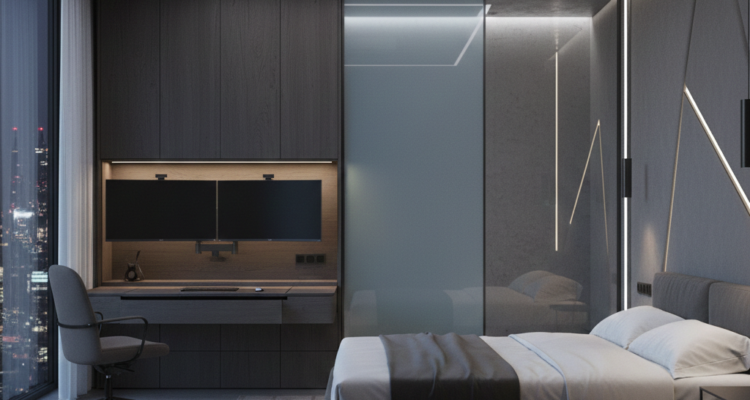
Attention: The way we live and work has undergone a seismic, permanent shift. With over 35% of the workforce now operating in a hybrid or fully remote capacity, the four walls of a home are no longer just a domestic sanctuary—they are a headquarters, a creative studio, a gym, and a refuge. This convergence has created a pressing dilemma for homeowners and investors alike: how can a finite space meet infinite demands?
Interest: The properties commanding premium prices and attracting top-tier tenants are no longer defined by sheer square footage alone, but by intelligent, adaptable square footage. The modern professional isn’t just buying a house; they are investing in an ecosystem that must seamlessly transition between high-focus productivity and deep-seated relaxation. The psychological toll of working from a kitchen table or a cluttered bedroom is well-documented, leading to burnout and diminished output. The market is now ruthlessly rewarding homes that solve this problem.
Desire: Imagine a property that doesn’t just react to a buyer’s needs but anticipates them. A space that can pivot from a lucrative short-term rental to a serene long-term residence, or from a solo professional’s domain to a growing family’s nest, all without costly renovations. This isn’t a futuristic concept—it’s the immediate reality of hybrid living. By designing for versatility, you’re not merely updating a home; you’re engineering a resilient asset that delivers superior returns and caters to the most powerful real estate investment trends of this decade.
Action: The question is no longer if you should adapt, but how. This article provides the strategic blueprint. We’ll dissect the principles of adaptive architecture and demonstrate how to transform any property into a high-yield, flexible instrument of both profit and well-being.
The Fluid Floor Plan: Maximizing ROI Through Modular Design
Gone are the days when walls were permanent and rooms had single, fixed purposes. The highest-yielding properties now embrace the ethos of the fluid floor plan. This strategic approach to flexible interior design prioritizes multipurpose zones over rigid, dedicated rooms, directly translating to a measurable increase in a property’s functional and financial value.
The key lies in deploying modular furniture and smart partitions. Consider a sleek, floor-to-ceiling sliding partition that can, in minutes, divide an open-plan living area into a soundproofed, professional-grade home office and a separate entertainment zone. The ROI is clear: you’ve effectively created a premium feature that appeals to remote workers, content creators, and consultants, allowing you to command higher rent or a faster, more competitive sale.
Investment in multifunctional spaces is an investment in market liquidity. A room described as a “flex room” or “adaptive studio” in a listing performs exponentially better than a static “den” or “formal dining room.” This language speaks directly to the modern buyer’s imagination. Data from leading real estate platforms shows that listings highlighting flexible spaces receive up to 40% more engagement and sell for a 5-10% premium over comparable static properties.
The materials matter. Mobile cabinetry on locking casters, transforming sofa beds with integrated storage, and height-adjustable desks are not just furniture—they are the hardware of a versatile asset. This approach future-proofs a property against shifting demographics and lifestyle trends, ensuring it remains relevant and desirable for years to come.
The Psychology of Space: Engineering “Cognitive Switches” for Peak Performance
Hybrid living success isn’t solely a physical design challenge; it’s a psychological one. The human brain craves delineation. The “always-on” feeling of remote work stems from the erosion of boundaries between “work mode” and “home mode.” Strategic adaptive architecture intentionally creates what psychologists call “cognitive switches”—physical or sensory cues that signal a shift in mental state.
Designing these switches is a data-driven art. It involves leveraging lighting, acoustics, and spatial sequencing to craft distinct “zones” within a single area. For example, a dedicated work nook might be defined by:
· Task Lighting: A focused, cool-temperature LED lamp that is turned on at the start of the workday and off at its conclusion.
· Acoustic Cues: The use of a white noise machine or the deliberate act of putting on headphones.
· Tactile Boundaries: A specific, ergonomic office chair used only for work, versus a plush lounge chair for relaxation.
This intentional separation is crucial for both productivity and mental recovery. A well-designed hybrid space doesn’t just allow someone to work from home; it allows them to stop working and be fully present at home. For the investor or homeowner, this translates into a powerful emotional selling point. You’re not just offering square footage; you’re offering a curated lifestyle of balance, focus, and well-being—a value proposition that resonates on a profound level and justifies a premium.
Case Study: The 24-Hour Room – From Home Office to Guest Suite to Fitness Studio
Let’s move from theory to tangible application. Consider a standard 12’ x 12’ bedroom in a suburban property. Traditionally, it’s a single-use space. Through the lens of hybrid living design, we transform it into a high-utility, revenue-generating “24-Hour Room.”
Scenario A: The Professional Work Pod (9 a.m. – 5 p.m.)
The space features a built-in, wall-mounted desk that folds away cleanly. A sound-absorbing panel artfully hangs behind the desk. A modular bookshelf holds both professional references and personal items. The lighting is bright and adjustable. This is a dedicated, distraction-free zone for video calls and deep work.
Scenario B: The Premium Guest Suite (5 p.m. – 9 a.m.)
With the desk folded, a Murphy bed with an integrated memory foam mattress glides smoothly down from a custom cabinet. The bookshelf’s lower cabinets reveal plush linens and towels. A compact, stylish wardrobe (already present) holds guest belongings. The room is now a private, welcoming retreat for visiting family, friends, or, significantly, a short-term rental guest—opening a direct revenue stream.
Scenario C: The Personal Wellness Zone (Weekends/Mornings)
With the bed secured upright, the clear floor space is utilized. A yoga mat is unrolled from a vertical storage rack. A wall-mounted monitor swivels for following workout routines. The environment supports physical health, another pillar of the modern lifestyle.
Investment Analysis:
The cost to implement this transformation—featuring a quality Murphy bed system, modular storage, and professional lighting—might range from $8,000 to $15,000. However, the value added is multifold:
- Rental Premium: The ability to market a dedicated, professional home office and a guest suite can increase rental yield by 15-25%.
- Sales Appeal: It dramatically expands the buyer pool to include remote professionals, multi-generational families, and savvy investors.
- Asset Resilience: The room’s function can adapt to the owner’s changing life stages without requiring structural renovation.
This case study exemplifies the core principle: multifunctional spaces are not a compromise; they are a multiplication of a property’s potential.
The Adaptive Edge in a Competitive Market
The rise of hybrid living is more than a passing trend; it is a fundamental recalibration of our relationship with domestic space. For the strategic real estate investor or the forward-thinking homeowner, this presents an unparalleled opportunity. By embracing flexible interior design and the principles of adaptive architecture, you are doing far more than a cosmetic update.
You are future-proofing your asset against economic and societal shifts. You are engineering a property that delivers superior financial returns through higher rents, faster sales, and broader market appeal. Most importantly, you are creating environments that support the complex, multifaceted lives of modern people—catering to their need for profit, productivity, and peace.
The market’s trajectory is clear. Versatility is the new premium. Don’t just build or buy space; design adaptability. The yield, in both currency and quality of life, will follow.

We Don’t Just Design Buildings; We Engineer Landmarks that Stand the Test of Time.
Let’em Know !
Share with friends and family.