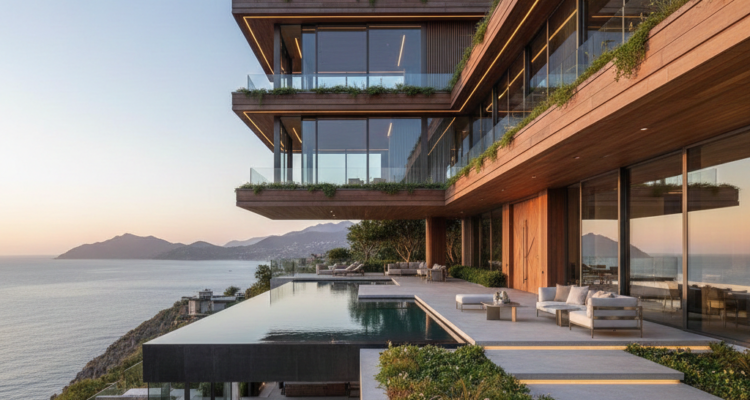
Modern high-end architectural design has evolved dramatically from traditional notions of opulence. Today’s luxury residences and buildings prioritize experiential quality, contextual integration, and personalized functionality over mere square footage and ornamental detail. The contemporary definition of luxury has shifted toward spatial fluidity, biophilic connections, and technological seamlessness. This transformation responds to a discerning clientele that values well-being, sustainability, and unique spatial experiences as the ultimate markers of prestige. This guide explores the principal types and advanced techniques shaping modern floor plans for high-end residential, multi-unit, and bespoke commercial buildings.
1. Foundational Principles of Modern High-End Design
Before examining specific building types, several core principles underpin all contemporary luxury architectural planning:
· Spatial Flow and Axial Movement: Modern plans often deconstruct traditional room divisions. Instead, they employ strategic zoning and visual axes to create intuitive, flowing movement between spaces while maintaining functional privacy where needed.
· Indoor-Outdoor Integration: This is no longer limited to a simple patio. It involves deliberate spatial interlocking, using floor-to-ceiling glazing, covered terraces, interior courtyards, and reflecting pools to blur boundaries.
· Material Honesty and Tactility: Luxury is expressed through the authentic use of materials—exposed structural concrete, natural stone, hardwood, and metals—celebrating their inherent textures and aging properties.
· Light as a Design Element: Architectural planning meticulously orchestrates natural light. Techniques include clerestory windows, light wells, and strategic aperture placement to create dynamic light patterns throughout the day.
· Wellness-Centric Environments: Plans are designed to support occupant health through cross-ventilation strategies, non-toxic material selection, dedicated wellness zones (spa, gym, meditation spaces), and acoustic design for tranquility.
2. Single-Family Luxury Residences: Typologies and Techniques
2.1 The Courtyard House (Modern Introvert)
This typology turns inward, organizing spaces around a central, private open-air courtyard.
· Plan Characteristics: A square or rectangular footprint with a hollow core. Rooms radiate off the courtyard, which acts as the primary focal point and light source for interior spaces.
· Key Techniques:
· Sequential Revelation: The entrance sequence builds anticipation, often moving through a compressed hallway that opens dramatically into the courtyard.
· 360-Degree Connectivity: Living areas feature full-height glazed walls facing the courtyard, creating a continuous visual and spatial loop.
· Microclimate Creation: The courtyard is landscaped to provide shade, cooling, and a sheltered outdoor living room, often with a water feature for evaporative cooling.
· Best For: Urban or suburban sites requiring privacy, noise mitigation, and a strong connection to a controlled natural element.
2.2 The Pavilion Plan (Modern Extrovert)
This approach fragments the program into distinct, often rectilinear volumes, connected by glazed links or covered walkways.
· Plan Characteristics: Separate “pavilions” for sleeping, living, and leisure, set within a landscaped site. The plan appears as a cluster of simple forms.
· Key Techniques:
· Site-Specific Siting: Pavilions are carefully placed to capture specific views, sun paths, and tree canopies, integrating the building subtly into the landscape.
· Functional Separation: Allows for clear zoning—the noisy social zone (living/kitchen) is isolated from the quiet private zone (bedrooms).
· Promenade Architecturale: Movement between pavilions becomes a curated journey through the landscape, enhancing the experience of the site.
· Best For: Expansive rural or coastal sites with exceptional views and topography, where integrating with the landscape is paramount.
2.3 The Vertical Loft / Stacked Plan
A response to narrower urban lots, this typology explores vertical spatial richness rather than horizontal sprawl.
· Plan Characteristics: A compact footprint with a multi-story volume. The focus is on double- or triple-height spaces, interior balconies, and sculptural staircases that connect levels visually and spatially.
· Key Techniques:
· Spatial Vertigo: Creating voids that draw the eye upward, making a modest footprint feel grand and dynamic.
· Programmatic Stacking: Placing public functions on lower floors and private ones above, with vertical circulation as a central, celebrated element.
· Light Tunnels: Using skylights, light slots, and strategically placed interior windows to channel natural light deep into the plan.
· Best For: Urban infill sites, city renovations, or clients desiring a modern, gallery-like atmosphere for art and living.
3. High-End Multi-Unit Residential: Condominiums & Apartments
3.1 The Lateral Apartment (Full-Floor Plan)
The pinnacle of urban multi-unit luxury, occupying an entire floor of a tower.
· Plan Characteristics: An unbroken perimeter allows for continuous window walls on all sides. The core (elevators, stairs) is centrally located, freeing the exterior for living spaces. Rooms are often arranged in a radial or pinwheel layout around a central circulation hub.
· Key Techniques:
· 360-Degree Panoramas: Capitalizing on the floorplate to provide sweeping, unobstructed views from every major room.
· Flexible Zoning: Using sliding partitions (pocket doors, translucent screens) to transform open-plan areas into more defined rooms as needed.
· Outdoor “Rooms”: Incorporating deep, usable terraces or winter gardens as integral extensions of the interior living space, not just balconies.
· Signature Feature: The “great room” concept—a seamless, corner-less living/dining/kitchen space wrapped in glass.
3.2 The Vertical Duplex/Triplex
Multi-level units within a taller building that recreate the spatial experience of a house.
· Plan Characteristics: A split-level organization where social functions (living, kitchen, terrace) typically occupy the upper level for better views, while private bedrooms are on a lower, quieter level. A monumental internal staircase is the centerpiece.
· Key Techniques:
· Spatial Drama: The entry is often on a mezzanine level, looking down into a double-height living space or up towards a skylight.
· Acoustic Separation: The concrete floor slabs between private and social zones provide superior sound isolation.
· Private Elevator Vestibule: The unit’s own elevator opens directly into a private foyer, ensuring exclusivity and security.
· Signature Feature: A towering, sculptural staircase or a two-story high interior “living wall.”
4. Bespoke Commercial & Hospitality Buildings
4.1 Luxury Boutique Hotels
The design focus is on creating a unique, immersive narrative for a small number of guests.
· Plan Characteristics: Asymmetric and organic circulation paths replace long, bland corridors. Public spaces (lobby, lounge, restaurant) flow into one another in a carefully sequenced journey. Each guest room is uniquely configured to its orientation and view.
· Key Techniques:
· Arrival Sequence: The path from street to lobby to room is treated as a theatrical experience, with changes in light, material, and scale.
· Room-as-Destination: Suites are designed as micro-residences, with distinct zones for sleeping, bathing, and lounging, often featuring freestanding tubs with views and expansive terraces.
· Hidden Service Infrastructure: A critical luxury element: service corridors, staff access, and technical rooms are meticulously planned to be entirely invisible to guests, ensuring seamless operation.
4.2 High-End Office / Corporate Headquarters (The “Non-Office”)
Modern workspaces designed to attract talent and foster innovation.
· Plan Characteristics: Extreme flexibility is key. Plans feature a mix of formal meeting rooms, informal collaboration “nests,” focus pods, and social hubs. The traditional corner office is often replaced with egalitarian, activity-based working.
· Key Techniques:
· Neighborhood Planning: The floorplate is divided into themed neighborhoods (quiet focus, team collaboration, social exchange) to suit different work modes.
· Central “Town Square”: A multi-story atrium or central staircase that serves as the heart of the building, encouraging unplanned interaction.
· Biophilic Integration: Direct access to terraces, interior gardens, and ample natural light for all workstations are non-negotiable elements of the plan.
5. Advanced Technical & Sustainable Integration
Modern high-end plans are not just about form; they are deeply integrated with performance systems:
· Passive House (Passivhaus) Principles: For ultimate energy efficiency. This involves a super-insulated, airtight building envelope, triple-glazed windows, and a heat recovery ventilation (HRV) system. The floor plan is optimized for solar gain (in colder climates) or shading (in warmer climates).
· Smart Home/ Building Automation: Fully integrated systems for climate, lighting, audio-visual, and security are planned from the outset. Conduit and wiring are meticulously laid out within walls and slabs to be invisible.
· Prefabrication & Modular Techniques: For precision and speed. Elements like bathroom pods, bespoke wall systems, or even entire volumetric modules can be fabricated off-site and assembled, allowing for higher quality control and complex geometries.
The Personalization of Luxury Space
The ultimate trend in modern high-end architectural design is hyper-personalization. The plan is no longer a standard template but a direct response to a specific client’s lifestyle, values, and site. Whether it’s a Courtyard House offering a serene urban sanctuary or a Lateral Apartment framing a dynamic city panorama, the modern luxury plan is a tailored instrument for living. It demonstrates that true contemporary luxury lies not in ostentatious display, but in the thoughtful, skillful, and beautiful orchestration of space, light, material, and experience.
Comparative Matrix: High-End Residential Plan Typologies
| Typology | Core Spatial Idea | Ideal Site Context | Key Luxury Experience | Primary Challenge |
|---|---|---|---|---|
| Courtyard House | Inward focus, privacy, centered on nature | Urban/Suburban (noise, privacy concerns) | A private, tranquil oasis; controlled microclimate | Bringing ample light to rooms facing away from the courtyard |
| Pavilion Plan | Extroverted, fragmented, landscape integration | Rural/Coastal (expansive views, natural beauty) | A journey through nature; seamless indoor-outdoor living | Managing weather exposure between pavilions; higher construction cost |
| Vertical Loft | Vertical volume, spatial drama, urban density | Urban (narrow lots, infill sites) | A dynamic, gallery-like atmosphere; perception of grandeur | Efficiently integrating storage and private functions within an open volume |
| Lateral Apartment | Horizontal expanse, panoramic views, full-floor privacy | High-rise in city center | Uninterrupted 360° city/water views; expansive, fluid living | Avoiding a “corridor” feeling; creating intimate zones within a vast space |
| Vertical Duplex | Multi-level living, house-like experience in a tower | High-rise (mid to upper levels) | Spatial separation of functions; the drama of an interior staircase | Ensuring both levels have quality access to light and views |

We Don’t Just Design Buildings; We Engineer Landmarks that Stand the Test of Time.
Let’em Know !
Share with friends and family.